Falcon Heavy
ACTIVEFirst flight: February 6, 2018 · United States · SpaceX
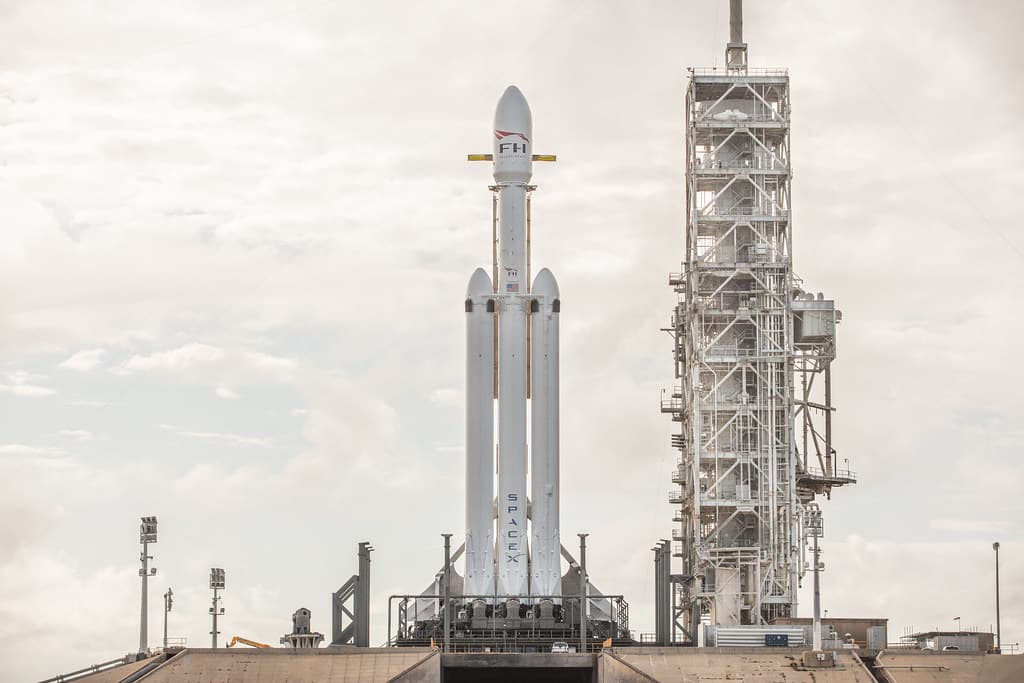
With the ability to lift into orbit over 54 metric tons (119,000 lb)--a mass equivalent to a 737 jetliner loaded with passengers, crew, luggage and fuel--Falcon Heavy can lift more than twice the payload of the next closest operational vehicle, the Delta IV Heavy, at one-third the cost.
KEY SPECIFICATIONS
70m
HEIGHT
12.2m
DIAMETER
1421t
MASS
63.8t
PAYLOAD LEO
$90M
PER LAUNCH
2
STAGES
2
BOOSTERS
100%
SUCCESS RATE
616113 kN
TOTAL THRUST
ENGINE SPECIFICATIONS
TYPE
merlin 1D+
LAYOUT
octaweb
COUNT
27
THRUST/WEIGHT
180.1
THRUST (SL)
845 kN
THRUST (VAC)
914 kN
ISP (SL / VAC)
288s / 312s
ENGINE LOSS MAX
6
STAGE DETAILS
First Stage
REUSABLE
Second Stage
EXPENDABLE
FAIRING
13.1m × 5.2m
PAYLOAD CAPACITY
LANDING LEGS
GALLERY
All data sourced from public APIs and publicly available sources. Not affiliated with SpaceX or any other agency.